Technology Platform Use Cases Market Request a Pilot
Investors

Building the system of record for wildlife risk.

WildlifeOS is the intelligence layer that turns wildlife risk into structured infrastructure. CrocAlarm, a sonar-first AI system for detecting aquatic predators before they surface, is the entry point.

Category

Physical-world AI infrastructure. No incumbent currently owns wildlife risk intelligence.

Initial Wedge

Crocodiles & alligators, focused on Florida communities — HOAs, golf courses, canals, and municipal waterfront assets.

Platform Expansion

SharkAlarm™ is next — then snakes, elephants, and coastlines, extending toward global wildlife risk detection.

01 Market Opportunity

A multi-billion to $100B+ opportunity, with no system of record.

LAYER 1

Florida Wedge — Immediate Revenue

~250K–400K targetable sites (canals, HOAs, waterfront assets). $250M–$400M hardware TAM. $300M–$720M SaaS ARR potential. This layer alone builds a meaningful, venture-scale business.

LAYER 2

Global Predator Expansion — Category Creation

Crocodiles & alligators → $2B–$5B+ annual impact. Sharks → $500M–$2B+ annual impact. Driven by liability, tourism disruption, beach closures, and insurance pressure. Even low-frequency events create massive economic consequences.

LAYER 3

WildlifeOS Platform — True Outcome

Real estate and asset-value impact, insurance underwriting transformation, tourism economics, and multi-species expansion (snakes, large mammals, agriculture). Broader wildlife-risk category: $50B–$200B+ annual economic impact.

WildlifeOS is not just selling detection — it is building the data and intelligence layer for biological risk in the physical world.

02 Global Market Reality

Florida is the proving ground, not the market.

The honest answer to “how big is this, really” is: bigger than one state.

Crocodilians are not a Florida problem. They are documented in 87 countries across Africa, Asia, the Americas, and Australia, and an estimated 1,000 people are killed by crocodiles every year — a number that is almost certainly undercounted, because the regions hit hardest are the ones least equipped to count. Florida is not the market. It is the proving ground: one of the few places on earth with the regulatory clarity (FWC's Statewide Nuisance Alligator Program), the paying customers — HOAs, resorts, municipalities — and the data-friendly environment to validate this technology fast. Prove it here. The conflict it addresses is global.

Fatality count is also the wrong measure, and it was investors on our own calls who made this point: compare this to cybersecurity, not to a body count. Most enterprises are never breached in a given year, and security budgets aren't sized to that base rate — they're sized to the catastrophic financial, legal, and reputational cost of the rare event when it happens. A single crocodilian incident at an HOA, resort, or municipality carries that same asymmetry: rare, but severe enough that continuous monitoring is rational long before the fatality count looks large.

The spend is not hypothetical. A single bad shark season can cost a coastal region over $100M in lost tourism revenue, and Queensland, Australia alone has spent AU$88M over four years on shark mitigation — nets, drones, patrols — with no real-time detection or intelligence layer behind any of it. Governments and tourism economies already pay heavily to manage wildlife risk. They just don't pay for intelligence yet. That is the gap.

Sonar is the right first sensor for the right first environment: murky, vegetated Florida canals where cameras fail. It is not the ceiling. Different species and environments demand different sensing — computer vision and thermal on land, acoustic and aerial imaging for open-water sharks, combinations we haven't built yet for what comes after. The core IP is the layer that doesn't change: edge AI classification, alerting, and data infrastructure behind whichever sensor a given environment calls for. WildlifeOS is not a bet on sonar. Sonar is simply where it starts.

Crocodilians

Freshwater canals, lakes, and wetlands. Sonar — proven first, here in Florida.

Sharks

Open beach and coastal water. Aerial/drone computer vision plus acoustic tagging.

Large Terrestrial Mammals

Savanna, rural, and agricultural land. Camera-trap computer vision plus thermal.

What Comes Next

Species and environments still to be determined. Same edge AI and data platform, new sensors as needed.

03 Why Now

This category is forming now — and still has no defining company.

Rapid Waterfront Development

Human expansion increasingly brings communities into direct contact with protected aquatic wildlife habitats.

Rising Liability Standards

Cities, HOAs, and insurers face growing legal and financial pressure to protect residents from wildlife threats.

Edge AI Advances

Recent breakthroughs in AI at the network edge make continuous, real-time wildlife monitoring technically and economically viable for the first time.

04 Technology Direction

A sonar-first, dataset-first approach.

CrocAlarm is built around imaging sonar, chosen because it works where cameras fail: murky water, darkness, heavy vegetation, and zero-visibility conditions. We are currently in a structured system-architecture and requirements-definition phase with an experienced hardware engineering partner, evaluating commercial and research-grade multibeam sonar platforms.

The evaluation metric that matters is not headline sonar range — it is identifiable target range: the distance at which the system can distinguish a crocodilian from a turtle, fish, or floating log. Camera imagery plays a supporting validation and labeling role; it is not the primary detection sensor.

Our near-term deliverable is a supervised, dock-mounted data-collection prototype. We have not yet completed field deployment or real-world detection validation, and we believe an infrastructure company earns credibility by being precise about its stage.

The Moat

The hardest part of wildlife detection is not the model — it is the labeled, real-world, behavioral data collected continuously over years. That dataset cannot be retroactively recreated.

Long-term vision: autonomous, solar-powered sonar nodes deployed along the human-occupied edges of a water body, networked for continuous, always-on detection.

Our current technical validation runs through our hardware engineering partner (Impact Electronic Solutions) and direct evaluation with sonar hardware manufacturers. We are actively expanding our advisory bench to add dedicated aquatic-acoustics and marine-biology expertise as the program moves from architecture into field trials — it's the single technical risk we're most focused on de-risking early, and we'd rather say so than paper over it.

05 Unit Economics

Expensive hardware is a phase, not the business model.

Sonar cost is a real objection. Here's exactly how we're sequencing around it.

Imaging sonar is not cheap today. We're not pretending otherwise — we're sequencing around it. Phase one is about proof, not margin: reliable crocodilian detection and classification, and the proprietary sonar-signature dataset and algorithms that are the actual moat. We run best-available hardware now, deliberately unoptimized for residential unit cost, because validated detection performance is the asset this phase exists to create.

Legacy multibeam sonar was priced for hydrographic-survey and defense budgets — often $30,000+ per unit. A newer generation of compact, software-defined, ROV- and robotics-grade imaging sonar has already emerged at a fraction of that cost, riding the same miniaturization and software-defined-processing wave reshaping robotics broadly. Once detection is proven on best-available hardware, the roadmap moves to OEM manufacturing partnerships and a per-unit cost that works at HOA and municipal scale — the same cost-down curve every hardware category before this one has ridden.

The business was never priced on hardware margin. Hardware can be placed near cost to win sites; the recurring monitoring subscription ($100–$150 per device/month) and multi-year enterprise and municipal contracts ($25K–$150K+ annually) carry the margin — the same hardware-enabled SaaS logic that built security cameras and fleet telematics into real businesses. Cost-down isn't a hope. It's a planned phase, built into how we've sequenced this raise and the next one.

PHASE 1 — NOW

Prove It

Best-available sonar hardware, proprietary sonar-signature dataset, and detection algorithms — validated performance is the asset.

PHASE 2 — POST-SEED

Scale It

OEM manufacturing partnerships, per-unit cost down to HOA/municipal-scale pricing, hardware-enabled SaaS margin.

06 Competitive Landscape

Why hasn't this already been built?

The pieces look adjacent. None of them solve this problem.

Consumer Camera Security

Ring, Verkada, Nest, and similar platforms are built for above-water, well-lit, human-shaped threats. Cameras fail exactly where crocodilian risk lives: murky water, darkness, and heavy vegetation cover.

Wildlife Camera Traps

Motion-triggered still cameras built for land-based species research. Not designed for continuous real-time alerting, and not built for underwater detection at all.

Marine & Defense Sonar

Mature sonar technology exists for defense, fishing, and marine research — but no one has built the edge AI classification layer, alerting pipeline, or commercial packaging for a residential, HOA, or municipal safety buyer.

Manual Patrols & Signage

The real competitor today. Static signs and infrequent patrols are reactive, not preventive, and scale with headcount — not software.

The category is open because it sits between industries — none of the direct sonar, camera-security, or wildlife-monitoring incumbents are building specifically for the intersection of real-time detection, edge AI classification, and the residential/municipal safety buyer. That gap is CrocAlarm's entry point, and WildlifeOS's long-term moat.

07 Validation Roadmap

From architecture to infrastructure.

PHASE 1

Controlled Sonar Data Collection

Tank and controlled environments capture labeled crocodilian movement signatures.

PHASE 2

Signature Dataset & Model Training

Build the initial labeled sonar dataset; train detection and classification models.

PHASE 3

Early Field Trials (Florida)

Deploy in 5–10 controlled real environments; validate detection accuracy and false-positive rates.

PHASE 4

Pilot Deployments (HOAs / Cities)

20–50 real-world deployments generating continuous dataset and customer validation.

PHASE 5

Compliance & Insurance Layer

Generate logs, reporting, and audit trails; begin positioning for underwriting and mandates.

08 Business Model

We sell risk reduction, not hardware.

Enterprise & Municipal Contracts

Multi-year bundled institutional agreements ($25K–$150K+ annually) combining hardware, SaaS, integrations, SLAs, and support.

SaaS Subscriptions

Recurring $100–$150 per device/month for real-time detection, alerts, analytics, OTA updates, and API access.

Hardware & Professional Services

Equipment revenue plus selective, high-margin services for complex installations and integrations.

09 Team

30-year friendship, compounding superpowers.
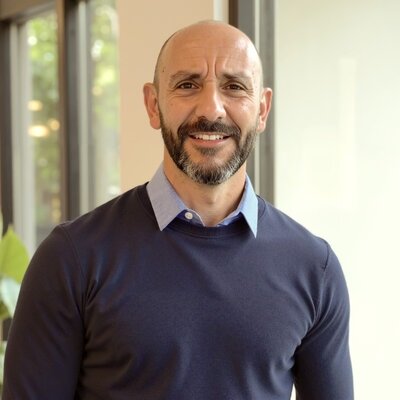
Rodolfo Saccoman
CO-FOUNDER / CEO / CGO

Rodolfo Saccoman, MBA

Serial entrepreneur leading commercialization, go-to-market strategy, partnerships, and the investor narrative for WildlifeOS.

EDUCATIONMBA, Cornell University / University of Miami
TRACK RECORDSerial founder with prior exits; $20M+ raised historically
FOCUSCommercialization, capital strategy, customer & partner development

Dr. Noel Elman
CO-FOUNDER / CHIEF SCIENTIST

Dr. Noel Elman, PhD

Owns deep tech, R&D, technical validation, and federal grant strategy — serving as Principal Investigator.

EDUCATIONPhD, Tel Aviv University / MIT / Cornell University
TRACK RECORDFounder, GearJump Technologies; former MIT Principal Investigator; 20+ years leading NSF / USDA / NOAA federally funded programs
FOCUSEnvironmental sensing, biological signal detection, field-deployed hardware
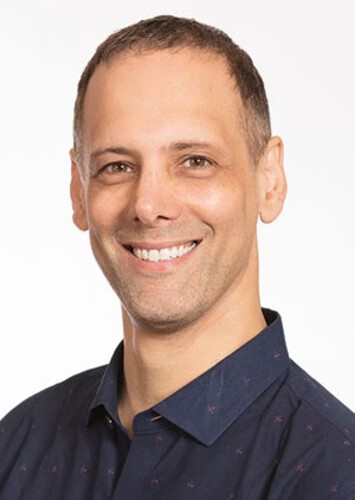
Adam Benzion
Adam Benzion Edge AI & Hardware Advisor · Director, Qualcomm · Co-founder, Hackster.io (acq. Avnet) · Edge Impulse (acq. Qualcomm) · Co-founded GreenSimian (acq. OtterBox)
Adam Benzion

“I've spent my career helping hardware teams get AI out of the lab and into the real world — the hard part is never the model, it's the data pipeline that makes edge inference reliable in the field. WildlifeOS is approaching wildlife detection with exactly that discipline: dataset-first, sonar-first, and honest about what's proven versus what isn't yet. That's the same rigor I look for in the best edge AI hardware companies I've built and backed.”

Adam Benzion Advisor · Director, Qualcomm
10 The Ask

Raising $1M to build the first proprietary wildlife sonar dataset.

A $1M pre-seed SAFE, $8M post-money valuation cap, targeting a close by end of August 2026.

Purpose of Capital

This round funds the work to move CrocAlarm from early prototype through controlled and early real-world field trials, and to build the first proprietary wildlife sonar dataset along the way — the foundation for pilots and early revenue to follow.

Use of Funds — 18-Month Runway

Product & Engineering

50%

Design, build, and iterate v1 sonar hardware, edge AI models, power systems, and ruggedized enclosures suitable for continuous outdoor deployment.

Field Testing & Validation

20%

Controlled and early real-world field testing to validate detection performance, false-positive rates, and operational reliability in aquatic environments.

Data & AI Development

15%

Build initial proprietary sonar datasets and behavioral models to improve detection accuracy and establish the foundation for a defensible data moat.

Go-to-Market Preparation

10%

Customer discovery, pricing validation, deployment models, and preparation for future pilot programs with HOAs, municipalities, and agencies.

Operations & Compliance

5%

Corporate operations, compliance groundwork, certifications planning, and supply chain preparation.

18-Month Objectives
  • Demonstrated, repeatable sonar-based detection performance in real aquatic environments
  • Production-ready v1 CrocAlarm hardware and software platform
  • Initial proprietary sonar signature dataset and trained models
  • Readiness to initiate pilots, pursue non-dilutive funding, and engage early customers
  • Clear technical and commercial validation to support a subsequent Seed round
Current Round

$1M Pre-Seed SAFE

$8M post-money valuation cap

Targeting a close by end of August 2026 ·

18-month objectives: repeatable sonar-based detection performance in real aquatic environments, a production-ready v1 platform, an initial proprietary sonar dataset, and readiness for pilots, non-dilutive funding, and a subsequent Seed round.

Request an Investor Conversation Download One-Pager (PDF)
Capital Strategy

This SAFE is designed to run in parallel with non-dilutive funding. Dr. Noel Elman has spent 20+ years as a Principal Investigator on NSF, USDA, and NOAA federally funded programs — we intend to actively pursue SBIR/STTR and related grants alongside this round to extend runway without added dilution.

“This is our opportunity to build something genuinely transformative — technology that saves lives, protects wildlife, generates unprecedented ecological data, and creates substantial economic value. CrocAlarm creates an entirely new category in environmental safety. Let's make this happen.”

— Rodolfo Saccoman & Dr. Noel Elman, Co-Founders

This round builds the first proprietary wildlife sonar dataset — the asset future competitors cannot replicate.

The End Vision — Within 36 Months

Scale

Hundreds of CrocAlarm deployments across Florida and expanding to other states.

Credibility

Peer-reviewed publications establishing scientific credibility, and a growing track record of incidents flagged and prevented that we can measure and report on.

Platform

Platform extensions to additional species creating multi-vertical revenue streams, plus success in obtaining add-on non-dilutive grant funding.

11 Investor FAQ

Direct answers to the questions we'd ask.

Isn't Florida too small a market for a venture-scale outcome?

Florida is the proving ground, not the ceiling. Crocodilians are documented in 87 countries, with an estimated 1,000 fatal attacks worldwide every year. Florida gives us the regulatory clarity and paying customers to validate fast — see Global Market Reality above for the full case, including sharks, where governments already spend tens of millions on mitigation with no detection layer behind it.

Doesn't a low fatality count mean this market is small?

That's the wrong measure, and it was investors on our own calls who pointed this out: compare this to cybersecurity, not to a body count. Most enterprises are never breached in a given year, and security budgets aren't sized to that base rate — they're sized to the catastrophic cost of the rare event when it happens. A single crocodilian incident at an HOA, resort, or municipality carries the same asymmetry: rare, but financially, legally, and reputationally severe enough that continuous monitoring is rational long before the fatality count looks large.

Isn't sonar too expensive to ever be a real residential product?

Yes, today's best-available sonar is priced for survey and defense budgets, not HOAs — we say so directly. That's why phase one is about proving detection performance and building the proprietary dataset, not hardware margin. Phase two moves to OEM manufacturing partnerships to bring per-unit cost down, the same curve every hardware category has followed. See Unit Economics above.

Isn't this just a hardware company?

No — hardware is the distribution mechanism for a data and software business. Node margins are secondary to the recurring monitoring subscription and, longer-term, the proprietary sonar dataset that trains WildlifeOS's detection models across species.

Why hasn't an existing camera security or wildlife company built this?

See our Competitive Landscape above — in short, cameras fail underwater and in the exact conditions crocodilian risk lives in, and no existing sonar player has built the edge AI, alerting, or commercial packaging for this buyer.

What's actually proven today versus still ahead?

Sonar-based real-world detection has not yet been field-validated — we're explicit about that throughout this site. This round funds the work to get there: architecture, prototype, and controlled/early field trials.

What's the regulatory relationship with FWC?

CrocAlarm has no authority to capture or remove animals — that stays exclusively with FWC-contracted trappers under Florida's Statewide Nuisance Alligator Program. The product is designed to make that existing, state-mandated system faster and safer, not to replace it.

What's the fallback if sonar underperforms in real conditions?

Camera-based validation data collected in parallel gives us a secondary labeled dataset and classification signal. Multi-modal sensing — sonar, camera, and eventually acoustic/thermal — is part of the architecture specifically so no single sensor modality is a single point of failure.

12 Get In Touch

Request an investor conversation.

We'll follow up within 2–3 business days.

Thank you.

We've received your request and will be in touch shortly.